

Description
Triple-Output High-Power Regulation
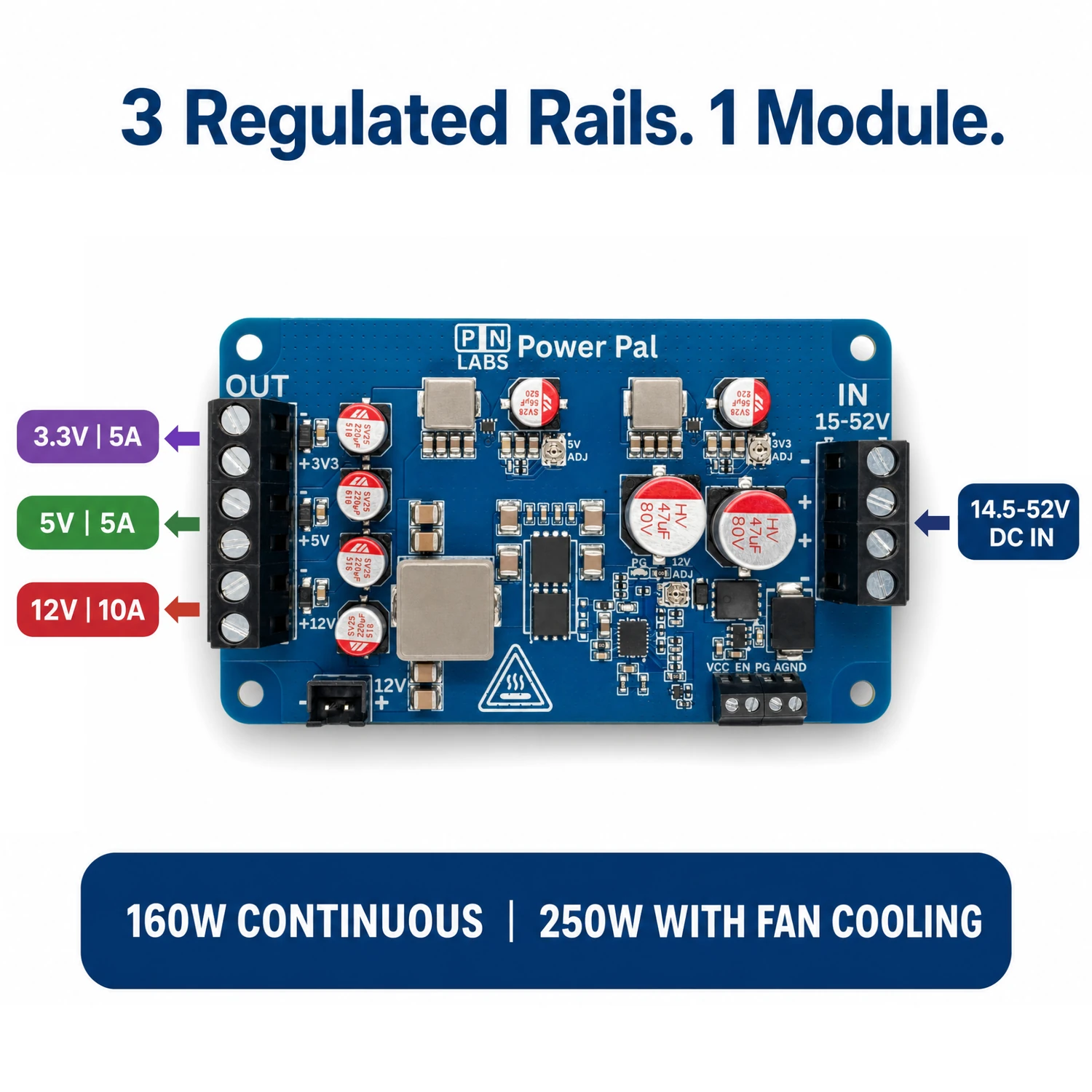
Simultaneously provides:
12 V @ 10 A continuous (up to 16–20 A with active cooling). Up to 95% efficiency.
5 V @ 5 A continuous (up to 6–7 A peak). Up to 88% efficiency.
3.3 V @ 5 A continuous (up to 6–7 A peak). Up to 85% efficiency.
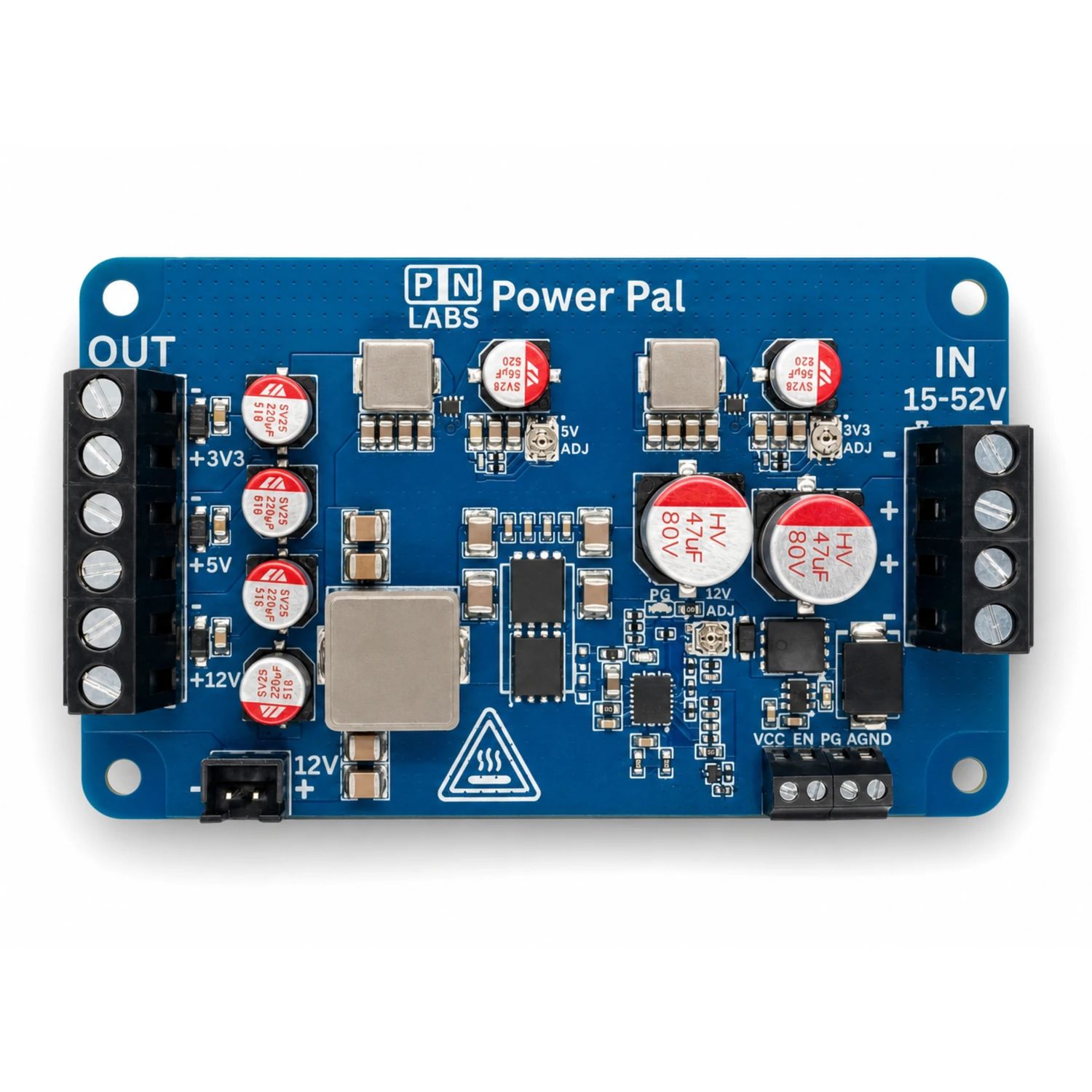
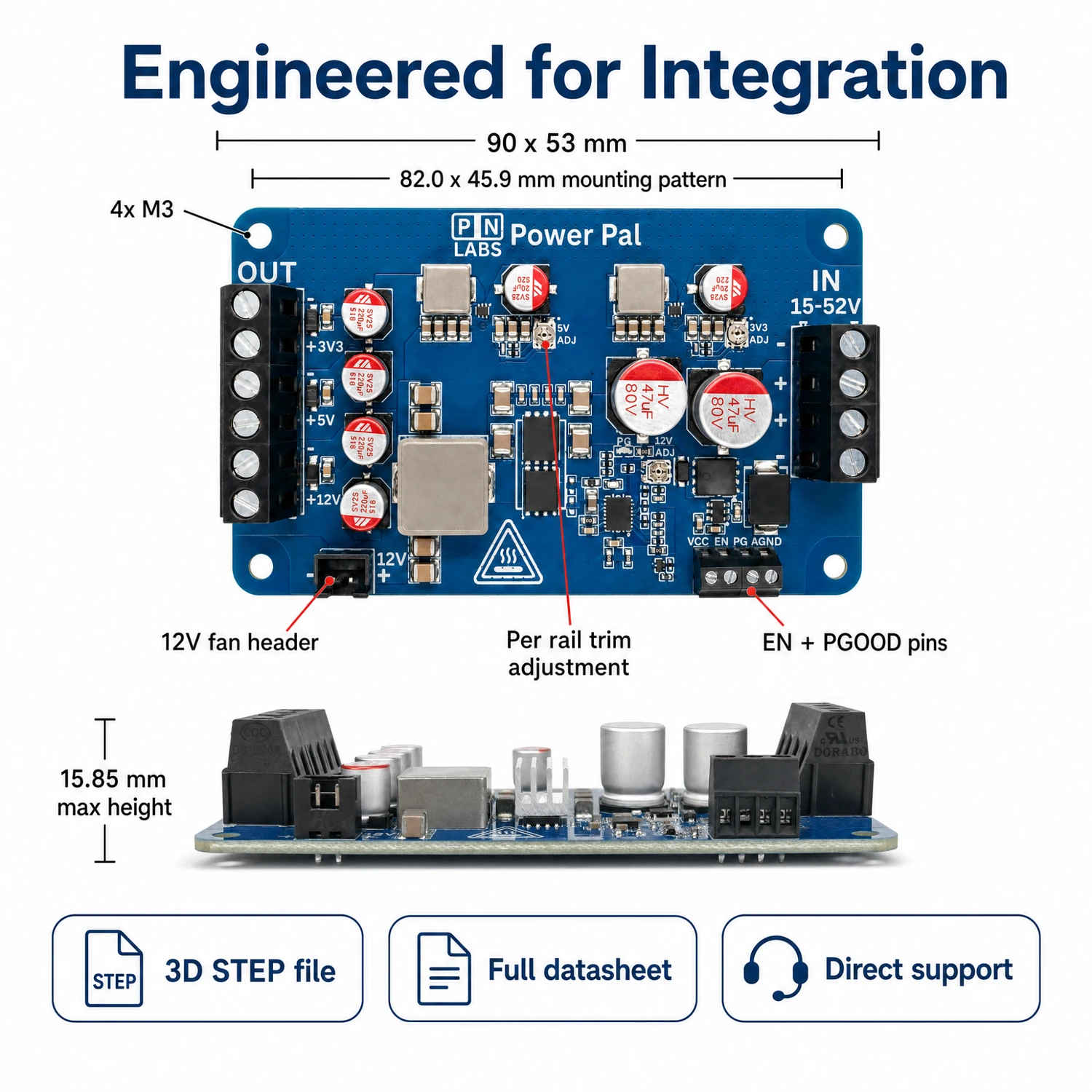
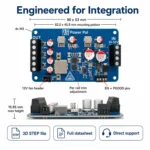
All rails are available at the same time and regulated independently, with adjustable output voltage trim to compensate for cable voltage drop.
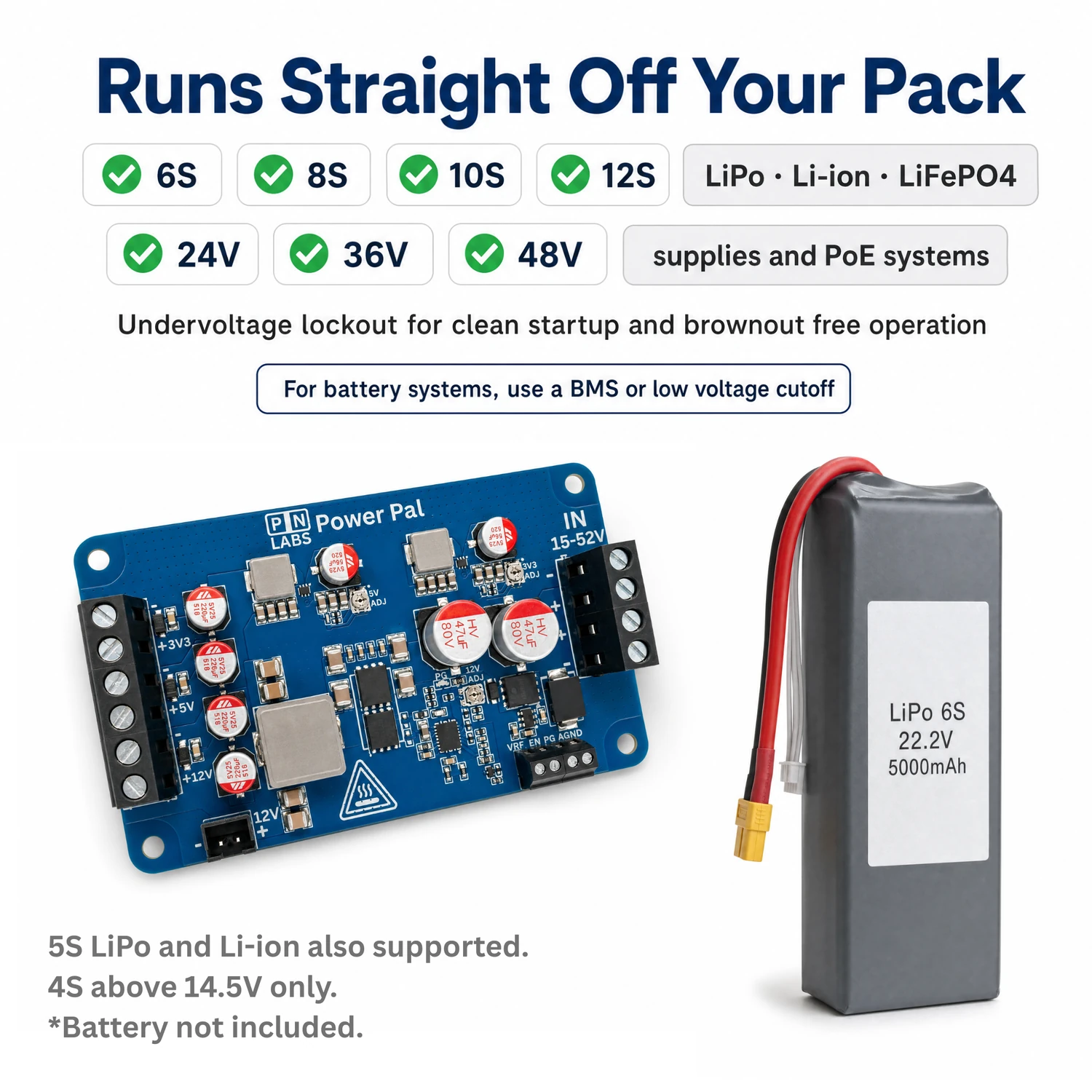
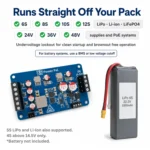
Wide Input Range (14.5–52 V)
Suitable for 5S–12S lithium battery packs.
Integrated undervoltage lockout prevents brownout operation and unstable startup.
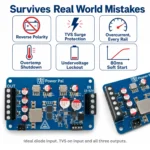
Comprehensive Protection Built In
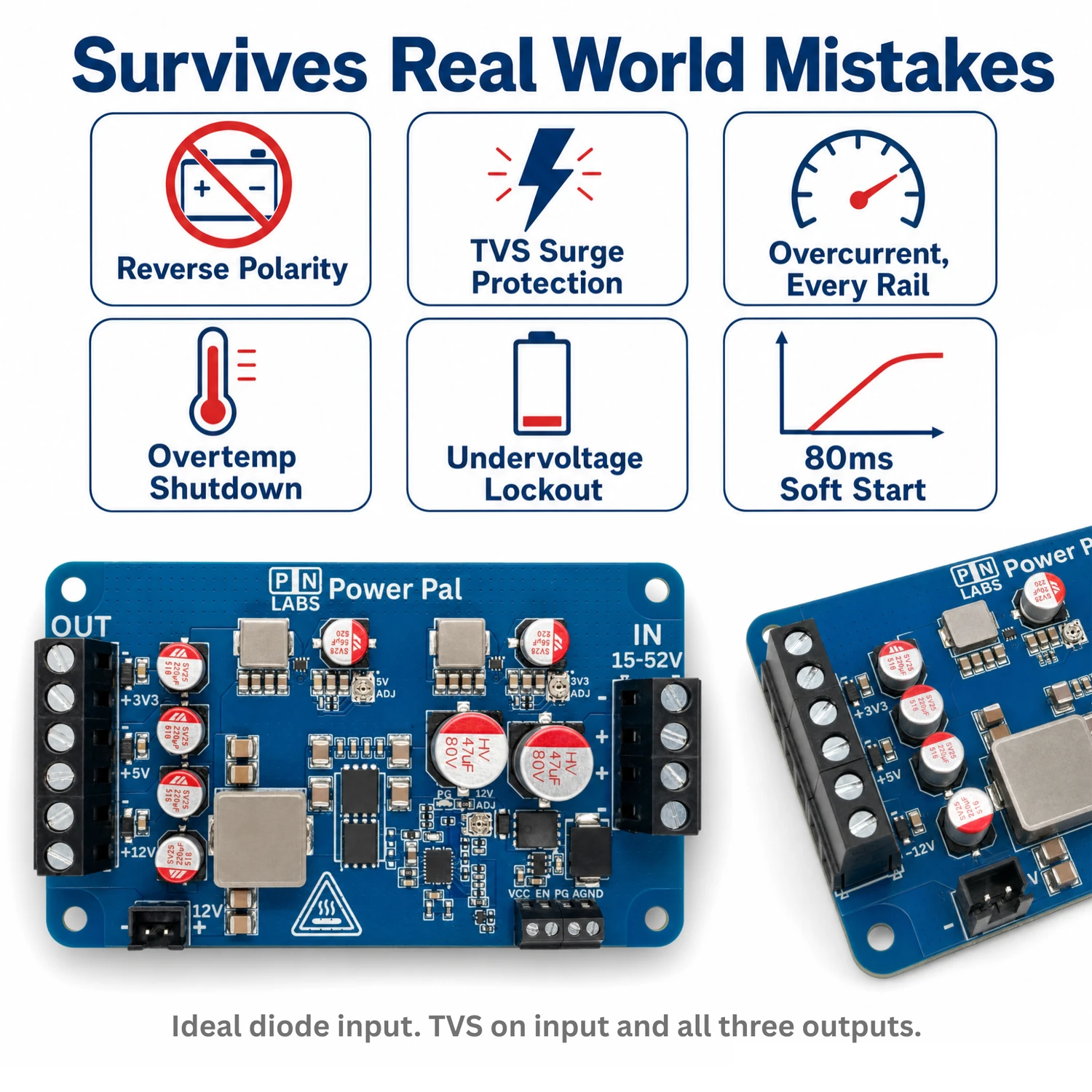
Reverse polarity input protection (ideal-diode MOSFET)
Input TVS surge protection
TVS protection on all outputs
Overcurrent limiting on each rail
Overtemperature shutdown with hysteresis
Undervoltage lockout and fault handling
Designed to survive real-world wiring mistakes, load faults, and transient events.
Important Usage Notes
- High-power regulators can reach dangerous temperatures under high load or high input-to-output voltage ratios. Do not touch during operation.
- Always power down before connecting or disconnecting loads.
- Long input or output wiring should use twisted pairs and local bulk capacitance.
- Inductive loads (motors, solenoids, relays) generate voltage spikes when switched off, and motors can back feed energy into the regulator whenever they’re spun by momentum or external forces. Use flyback diodes and/or local TVS protection for spike suppression, and consider ideal diodes to block back feeding.
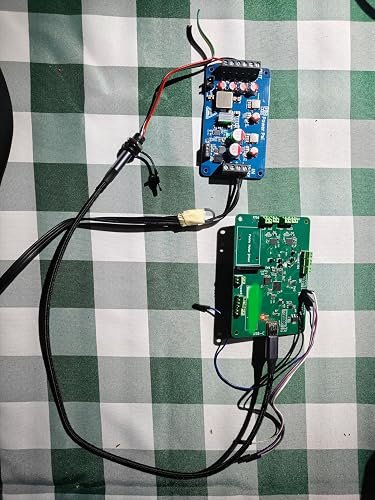
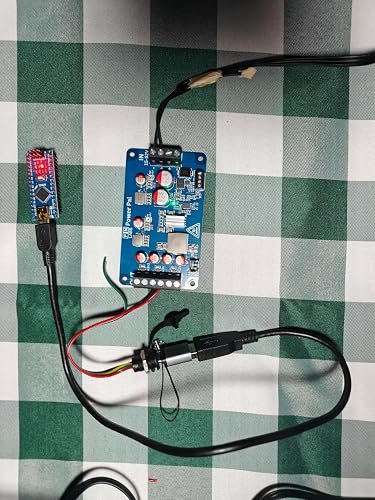
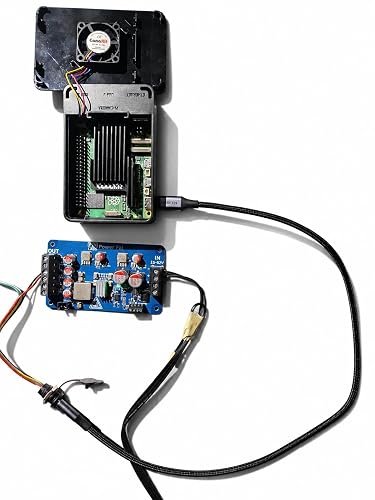
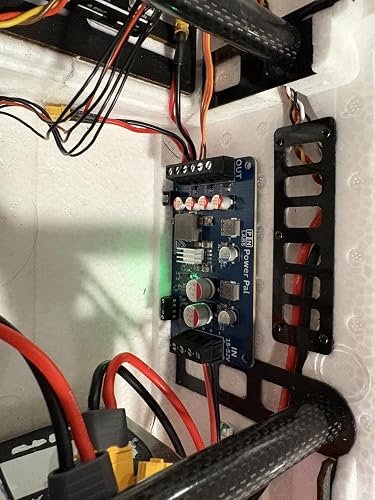
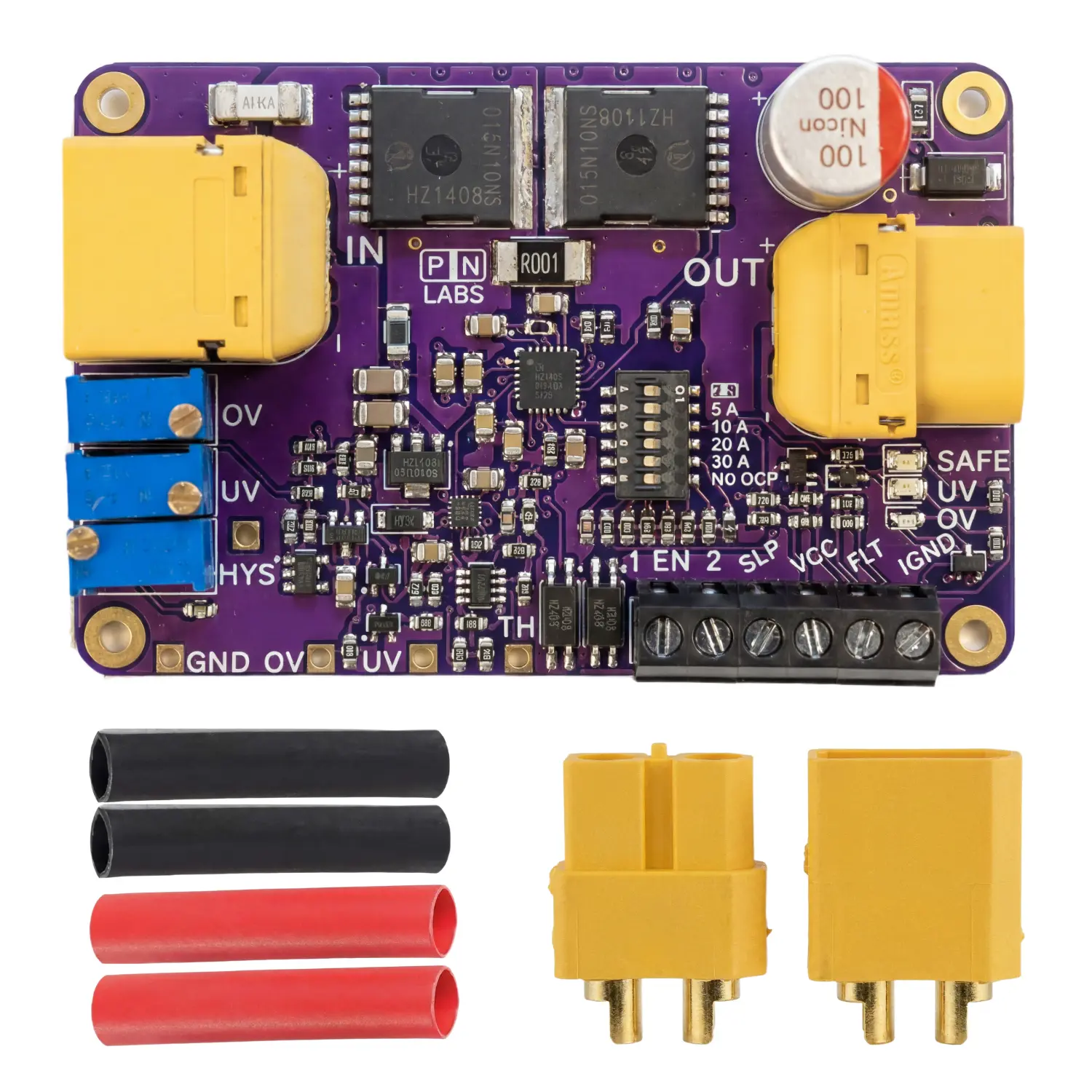
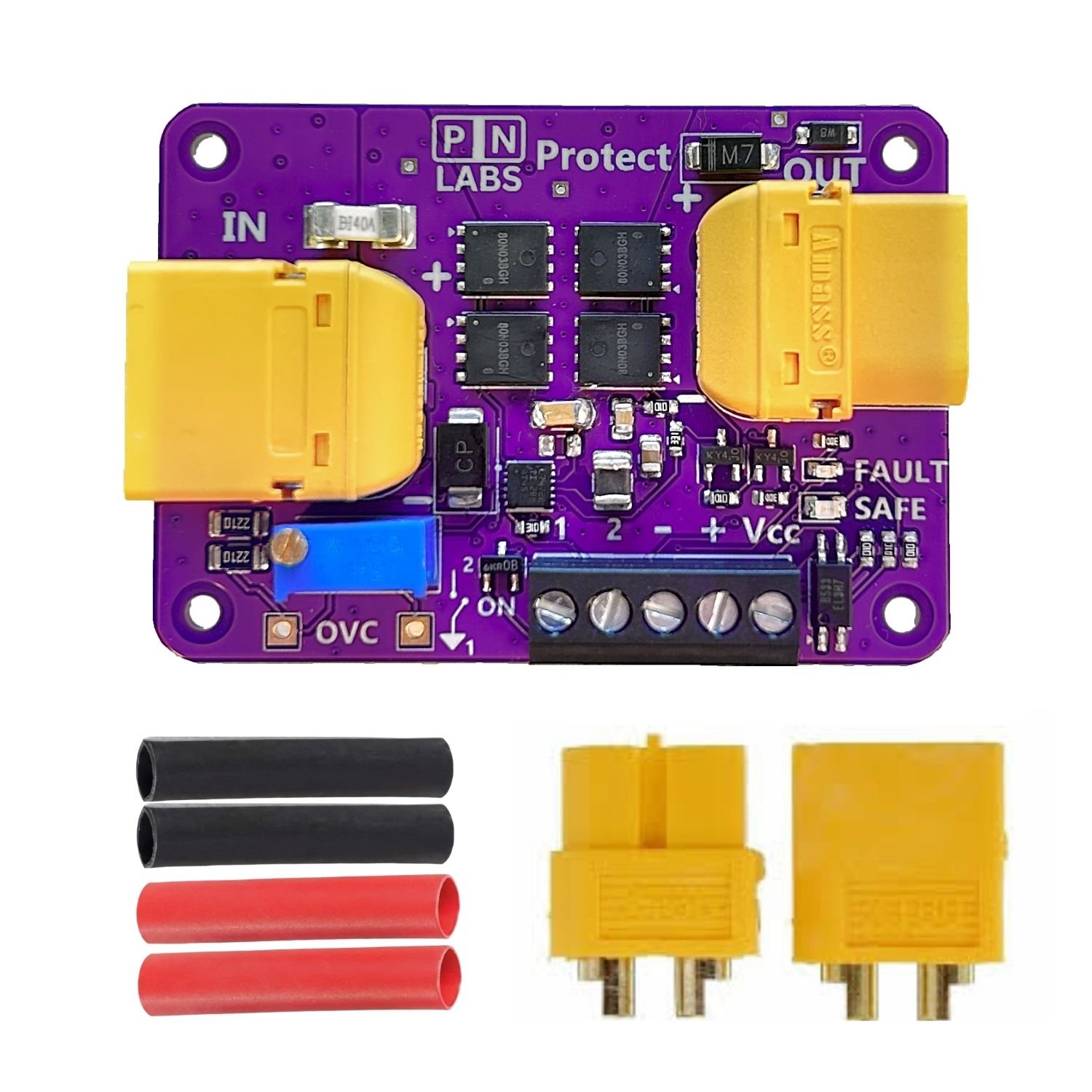


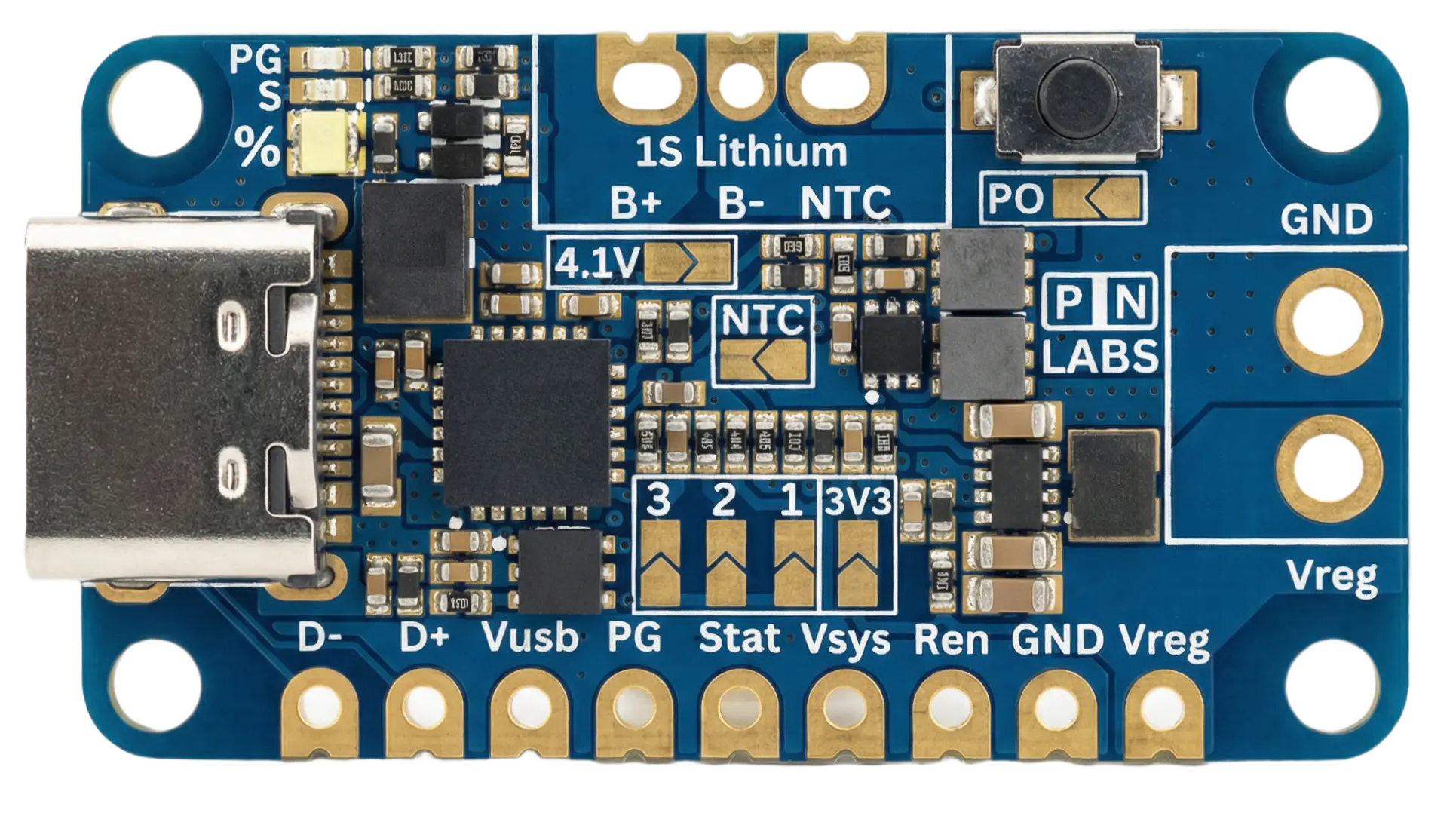
The power pal is very versatile with the large range of voltage input and the multiple DC voltage outputs. While travelling, I was able to work on my electronics projects by connecting the 16V DC output from a generic power adapter to the power pal and use the output voltage to test a pcb I designed and operate my Raspberry pi.
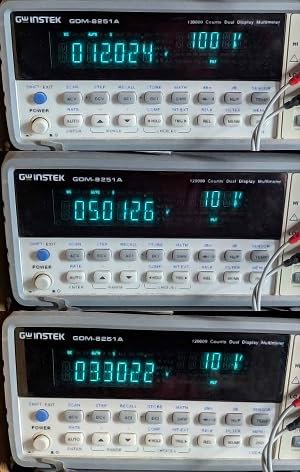
The component and assembly quality of the buck converter is pretty much perfect. I tested with my bench power supply set to 24VDC, and then measured the open circuit voltage on each rail. A photo of the results are attached. Totally acceptable. I performed a second test with a ~1A load on each rail (just using an assortment of power resistors I had in my parts bin) at the same time, and didn’t see any significant difference in voltage at the terminal blocks. I let this run for ~15 minutes, and the board was getting fairly warm.
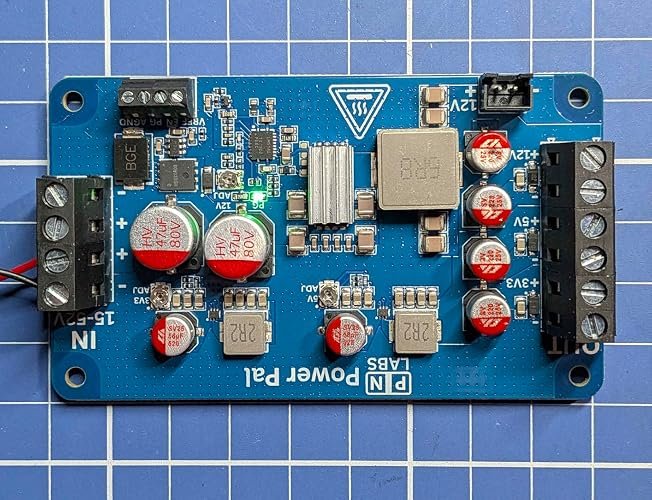
I wish the output rail terminal blocks were better separated. I would prefer to see three groups with some space between them instead of all six bundled together. I would have also preferred if the switching transistors were placed in areas more conducive to heatsinking (on the bottom of the board, for example, although I get that this makes PCBA more involved) for running at higher loads for longer periods of time. It would also make the module great for attaching directly to a metal chassis with a thermal pad (or similar) to wick the heat away.
I think the price ($85.99CAD at time of review) is a bit high for what you get here, but it’s generally a fine module without any significant issues.
[Vine customer review of free product]
Fantastic little power board. This board is part of a project to run a couple off grid trail cameras using 2 raspberry Pi (5V) and 2 IR flood lights (12V). I paired it with a 9Ah 25V LiFePO4 battery to give me days of runtime between recharges. Considering adding a LoRa modules (3.3V) for some added telemetry. Super versatile. Solid construction. Beefy screw down terminals. What’s not to love.
[Vine Customer Review of Free Product]
Used this to power my 12 V telemetry module and my 5V servos from my drone’s battery pack. Worked right out of the box.