
Battery Pal
Add battery power to any embedded product in minutes.
Here is the full Battery Pal breakdown.
$14.99 for the first 500 backers. $21.99 after.
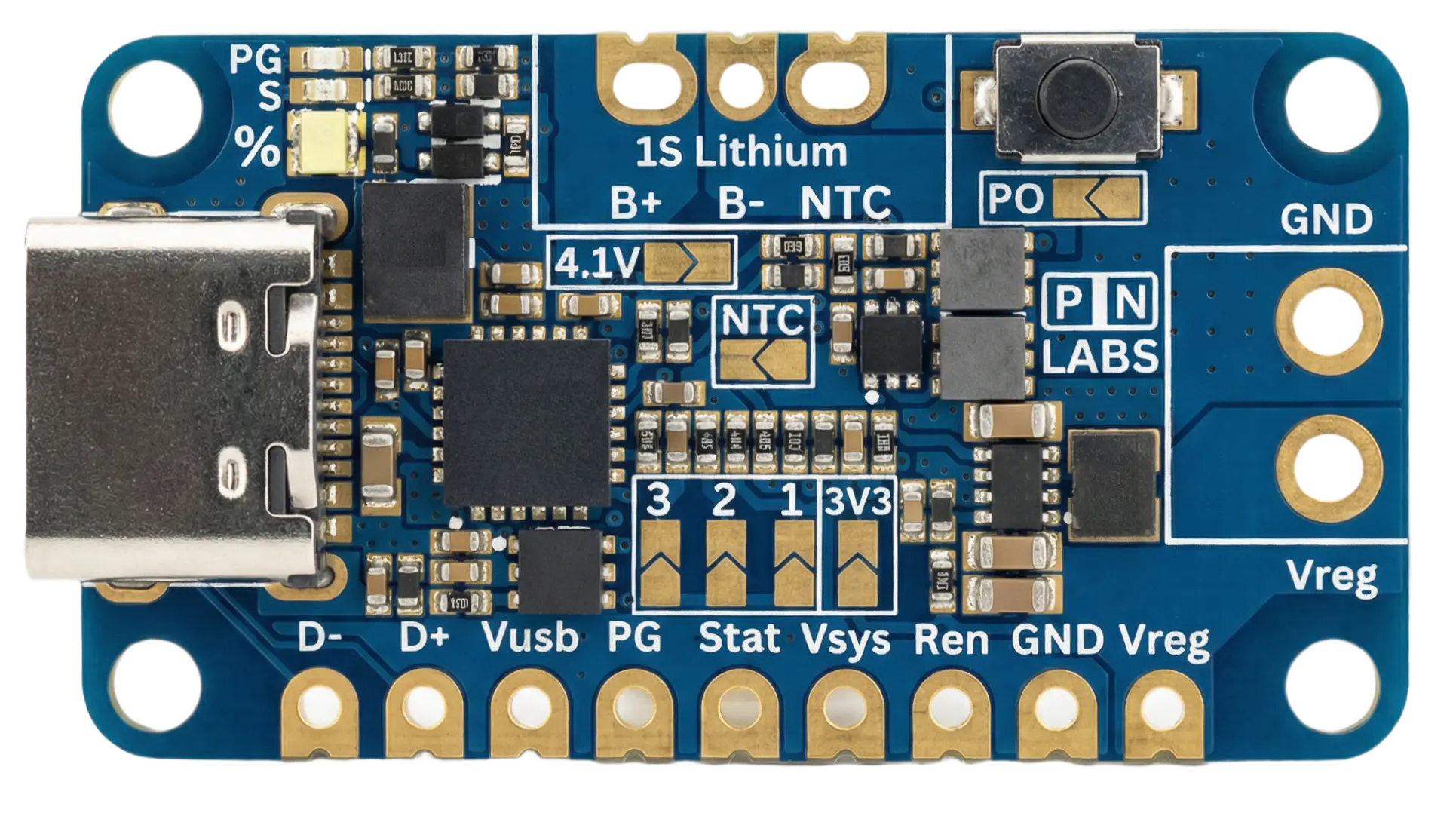
Photo is of Rev B. Rev C is coming soon.
Ethan · designed and scaled battery-powered consumer products to mass production (100,000+ PCBAs used by customers)
Nick · previous Tesla Battery R&D and trained at a world-leading lithium-ion research lab
PN Labs already ships Protect, Protect+, Protect Nano, FlexTrip, PowerPal, and NanoBuck through our store, Amazon (US & Canada), Elecrow, RobotShop, and Lectronz. See where to buy.
Battery Power Should Be Easy.
Every builder hits the same walls.
It's Never Just a Battery
You sat down to build your product. Three weeks later you're reading charger IC datasheets and laying out protection circuits. The battery circuitry has taken over the build.
Lithium Batteries Don't Forgive
A shorted output, a charge cycle in a hot car, or an over-discharge over the weekend can all cause permanent damage. Without proper protection, lithium batteries fail in ways you can't undo.
Nothing Does the Whole Job
The $0.30 modules have no regulated output and no real protection, while the name-brand boards top out at 1A over Micro-USB with no dedicated protection IC. Every option leaves something critical missing.
Meet Battery Pal
Battery Pal is one module with everything a single-cell lithium product needs: USB-C PD charging up to 3A, dedicated battery protection with temperature-safe charging, and a regulated 3.3V or 5V output.
Every parameter is configured with labeled solder jumpers on the board, so there's no firmware to flash, no I2C registers to set, and no driver to write. It works from the moment you apply power. The one exception is the advanced fuel gauge: using it requires configuration over I2C with a driver we provide.
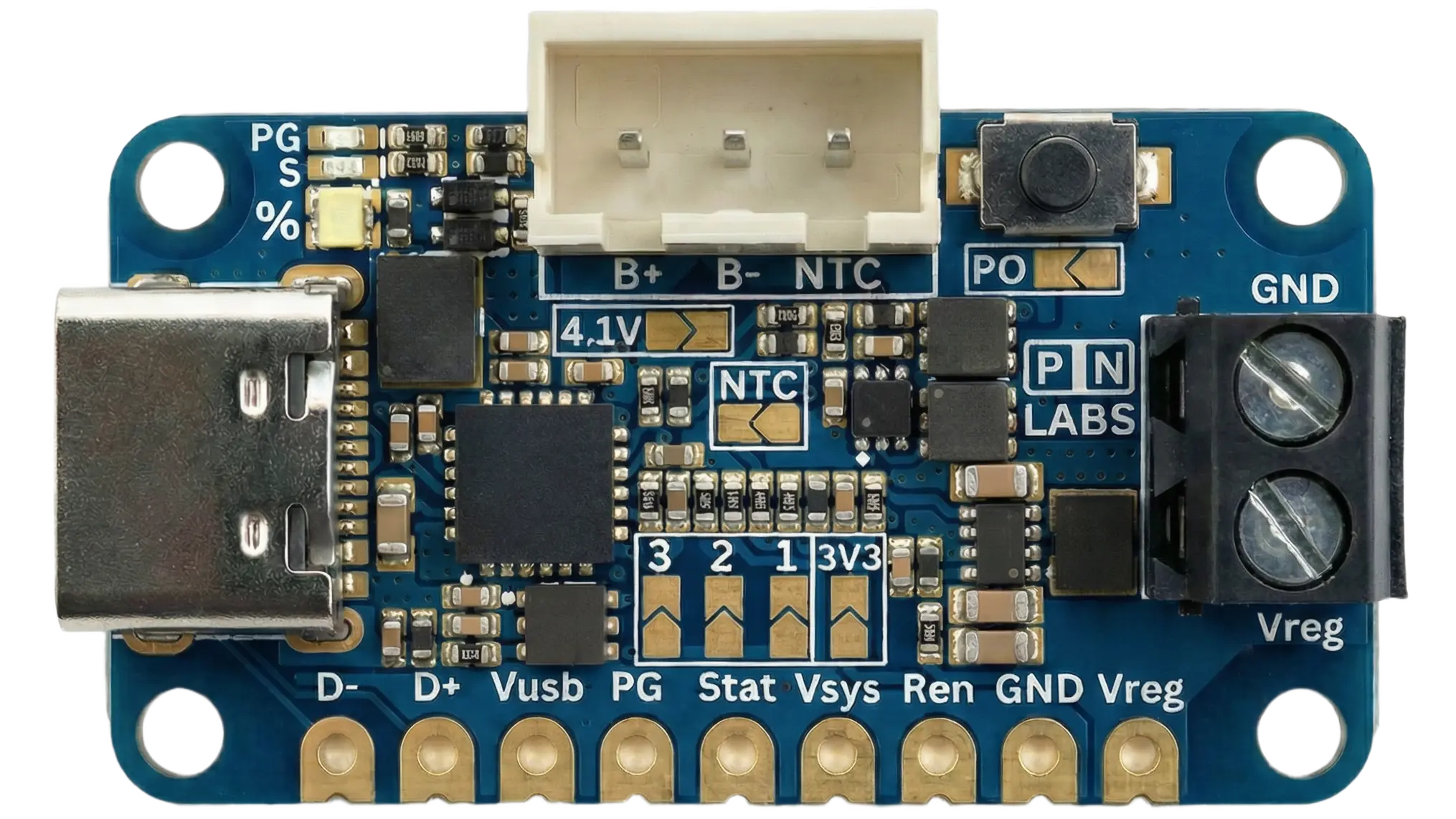
Battery Pal is designed for 3.7V nominal (4.2V max) single-cell lithium batteries only. Performance depends on the connected battery cell.
Everything Your Product Needs to Run From a Battery
USB-C in, 3.3V or 5V out, and your battery is protected.
Everything is configured with labeled solder jumpers, not code, unless you want to use the advanced I2C fuel gauge.
USB-C Power Delivery Input
Onboard PD controller auto-negotiates 5V or 9V. Also works with any 5V USB-A charger via A-to-C cable.
5V / 9V PD •Any 5V USB source
Direct Vusb Input & D+/D- Passthrough
Use USB-C on the bench, then switch to your own 5 to 14V rail in production. Power from USB and the external input simultaneously. The higher voltage takes priority. D+/D- can pass through to castellated pads, so you charge and transfer data over a single cable. Cut the two jumpers to enable it: out of the box those lines run to the PD negotiator instead, which is what lets the board detect a BC1.2 charger.
5–14V direct input •OVP at 30V •40V abs max •Data passthrough via jumpers
Up to 3A, 4.2V Smart Charger
Charge current set by solder jumpers: 0.5A, 1A, 2A or 3A. Optional 4.1V jumper for longer cycle life. 10kΩ NTC thermistor support with bypass jumper.
0.5 / 1 / 2 / 3A jumpers •4.1V option •NTC support + bypass
Buck-Boost Regulated Output
The output defaults to 5V, and you can solder the 3V3 jumper for 3.3V. It stays stable from full charge down to the 2.7V cutoff with no dropout or glitches, using every drop of battery capacity. That is the same point the protection IC cuts off at, so the rail holds up for as long as the cell is allowed to run.
Up to 1.5A output •3A unregulated via Vsys •<20 mV ripple •2 MHz switching
µA-Level Module Idle Draw
Idle draw is measured in microamps, so a small battery lasts for years on standby. Disable the regulator via the Regulator EN (Ren) pin for deep shutdown, or use the fuel gauge's ship mode to cut draw even further for storage.
Years of standby •Regulator disable pin •Deep shutdown mode
Breadboard to Production
Use 2.54mm headers for prototyping and castellated SMT pads for production reflow, all on the same board from bench to product. Batteries connect via JST PH (2mm), JST XH (2.54mm), or direct solder. The JST PH 3-pin connector and NTC Sense Adapter are included, and a cable adapter kit for common battery connectors will be available at launch.
JST PH / XH / direct solder •NTC Sense Adapter •4x M2 •Castellated edges
Advanced users: solder the PO jumper to bypass the onboard protection IC for batteries with built-in protection circuitry.
Board will get warm under load or while charging. This is normal.
Battery Pal is in active development. Specifications may change before launch.
What You Give Up With Everything Else
How Battery Pal stacks up against the boards you already know, in full.
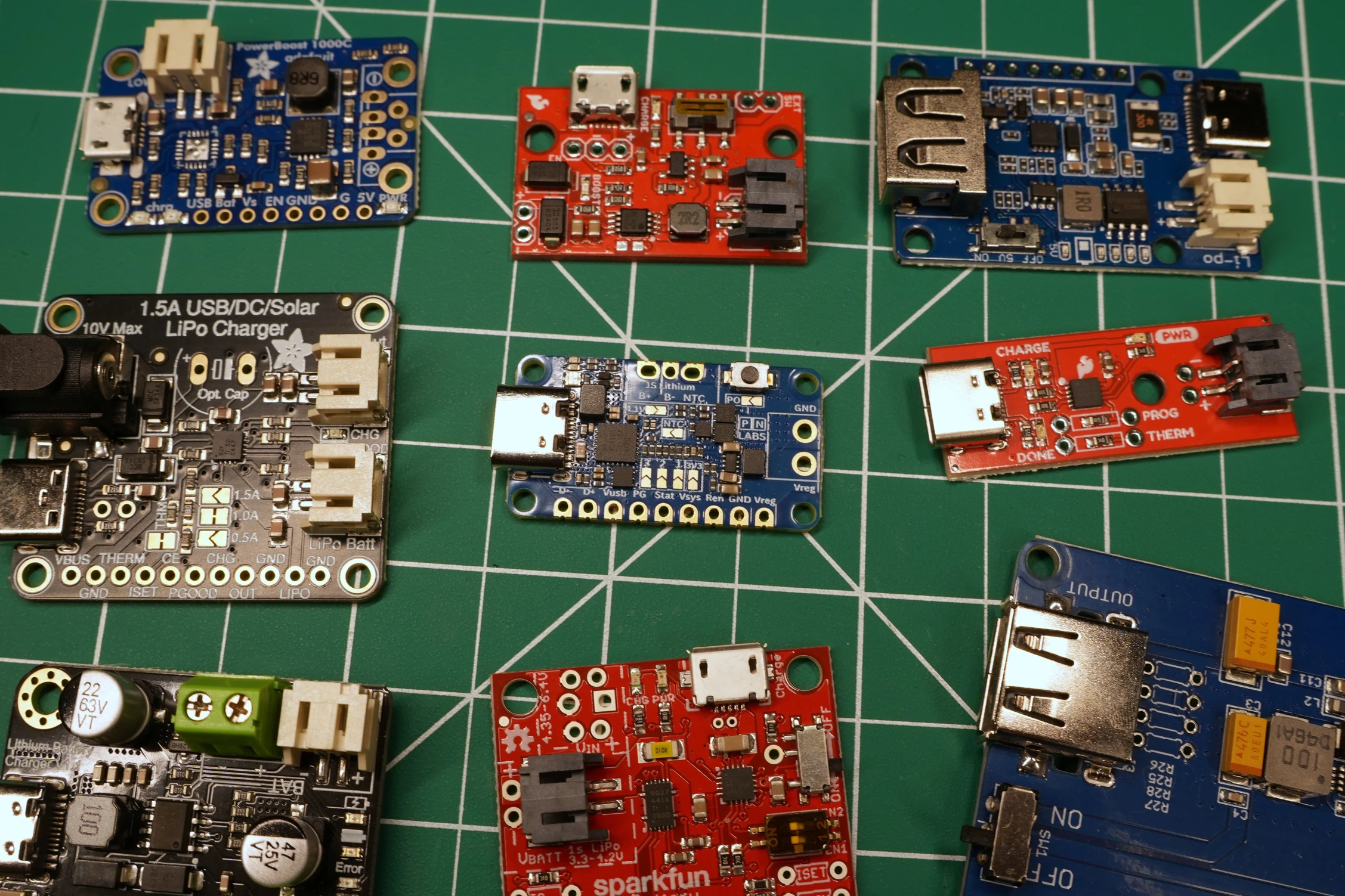
Nine modules, thirty one specifications, every value taken from manufacturer documentation, schematics and datasheets, and every product name linked to their page so you can check any of it.
See the full comparisonBattery Pal is the only module in that chart with USB-C Power Delivery, a dedicated protection IC, or castellated pads for reflow, and the only one that ships ready for temperature monitored charging.
What is the NTC Sense Adapter?
Most single-cell batteries don't include a temperature sensor. The included NTC Sense Adapter is a small thermistor sticker that attaches to your cell, so Battery Pal can watch battery temperature for safer JEITA charging. Your battery's 2 Pin JST PH plugs into the adapter, and the adapter's 3 Pin JST PH carries B+, B-, and the temperature signal into Battery Pal. Adapters for other common battery connectors will be available at launch.
Interested? Get the datasheet when it's ready.
Built For Your Next Product
Battery Pal works with anything that needs a single-cell lithium battery, clean power, and proper protection.
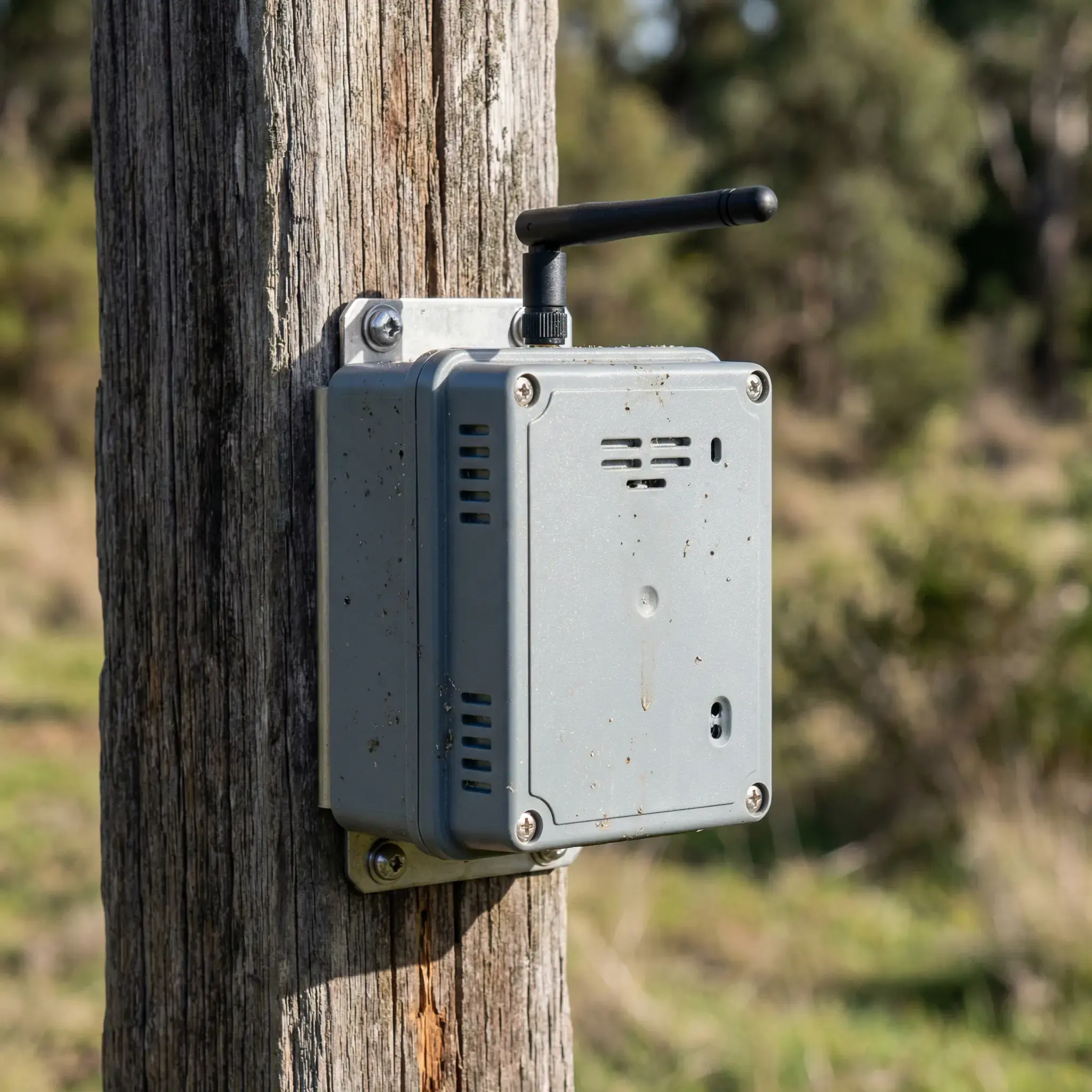
IoT Sensors & Nodes
Pair an ESP32 or nRF with environmental sensors and let the ultra-low idle draw keep your remote sensor running for years between charges.
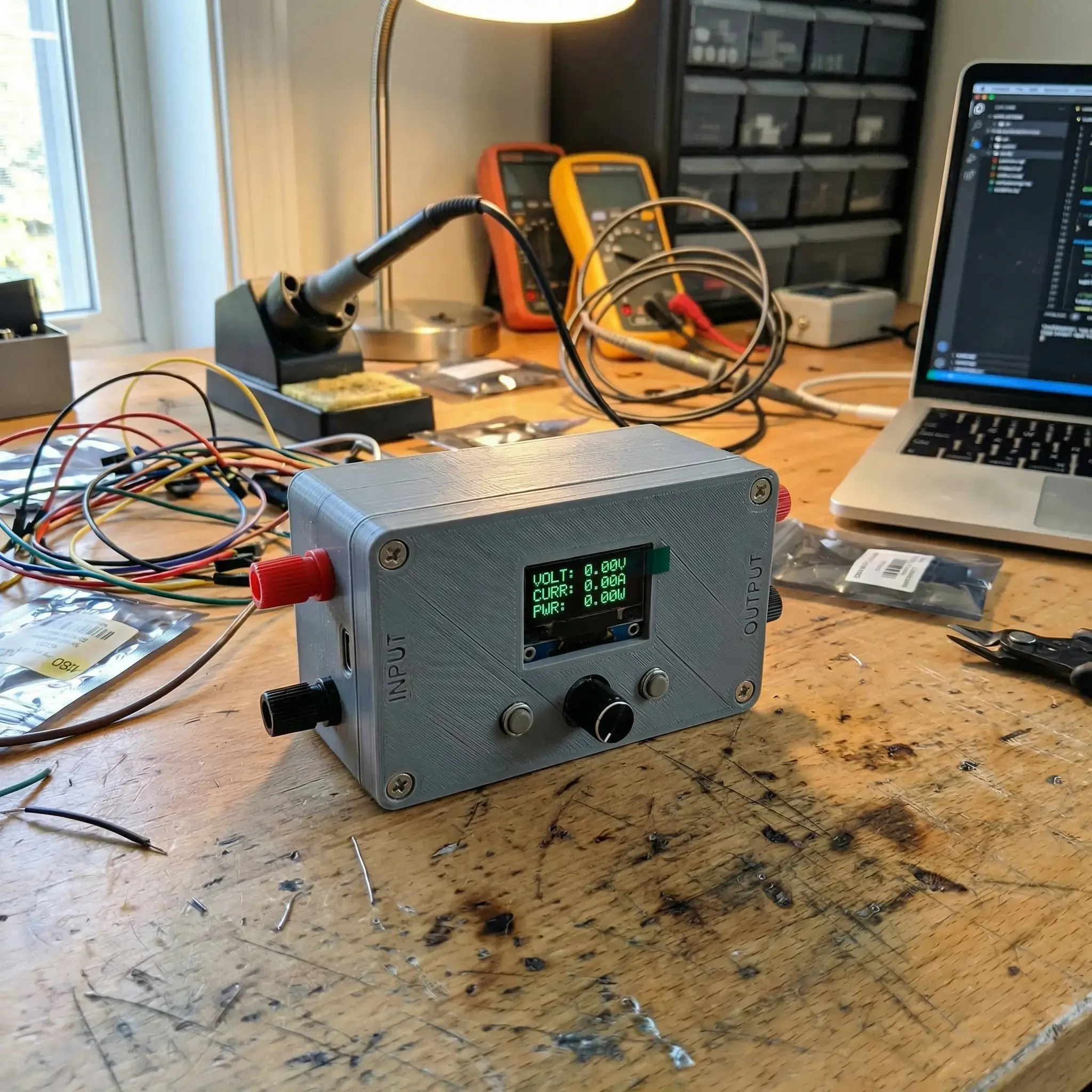
Portable Instruments
Power handheld meters, data loggers, and test equipment with a stable 3.3V or 5V output regardless of battery state, and charge via USB-C between uses.
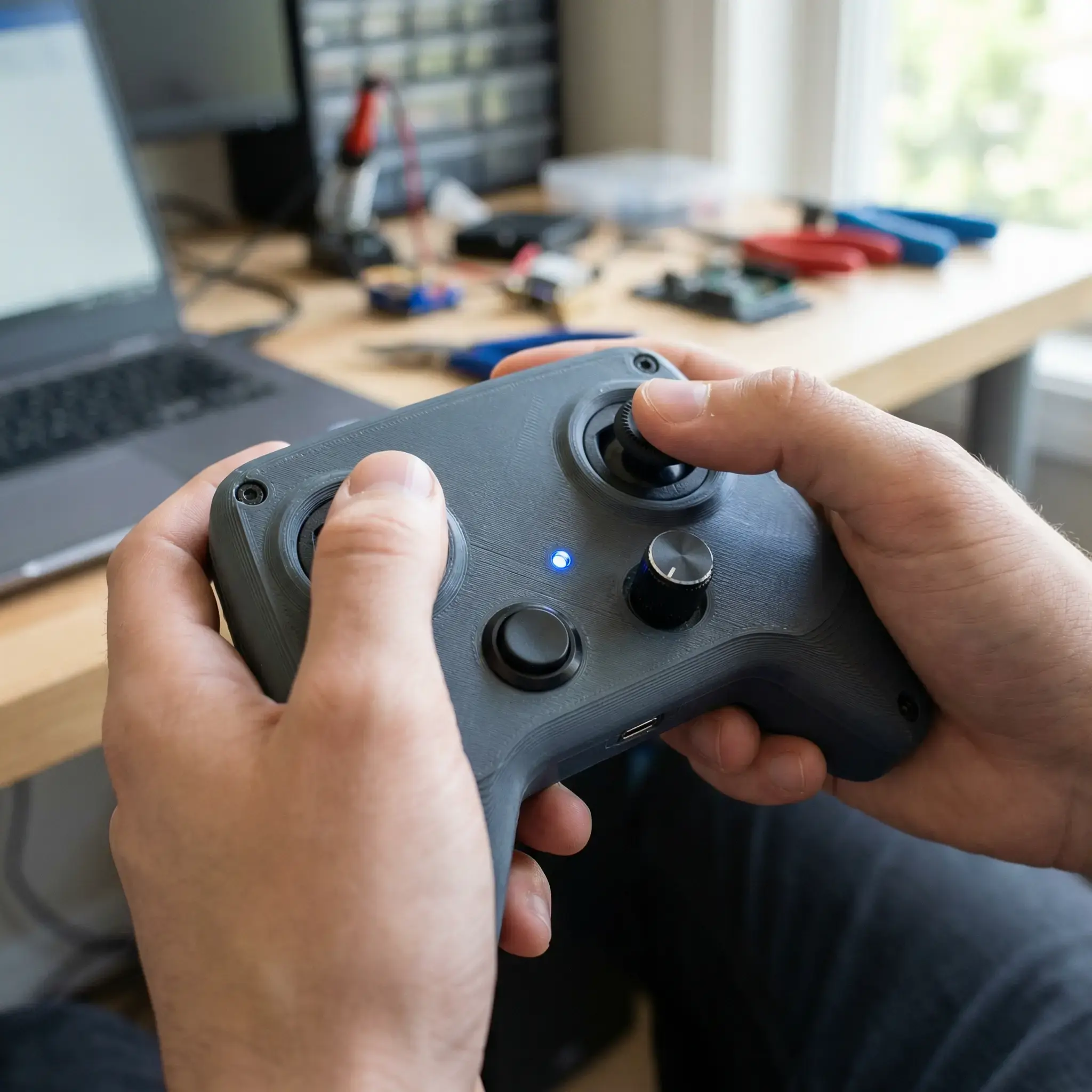
Robotics
Power your control board, sensors, and small motor drivers with up to 1.5A of regulated output, or draw up to 3A directly from Vsys for higher-current loads.
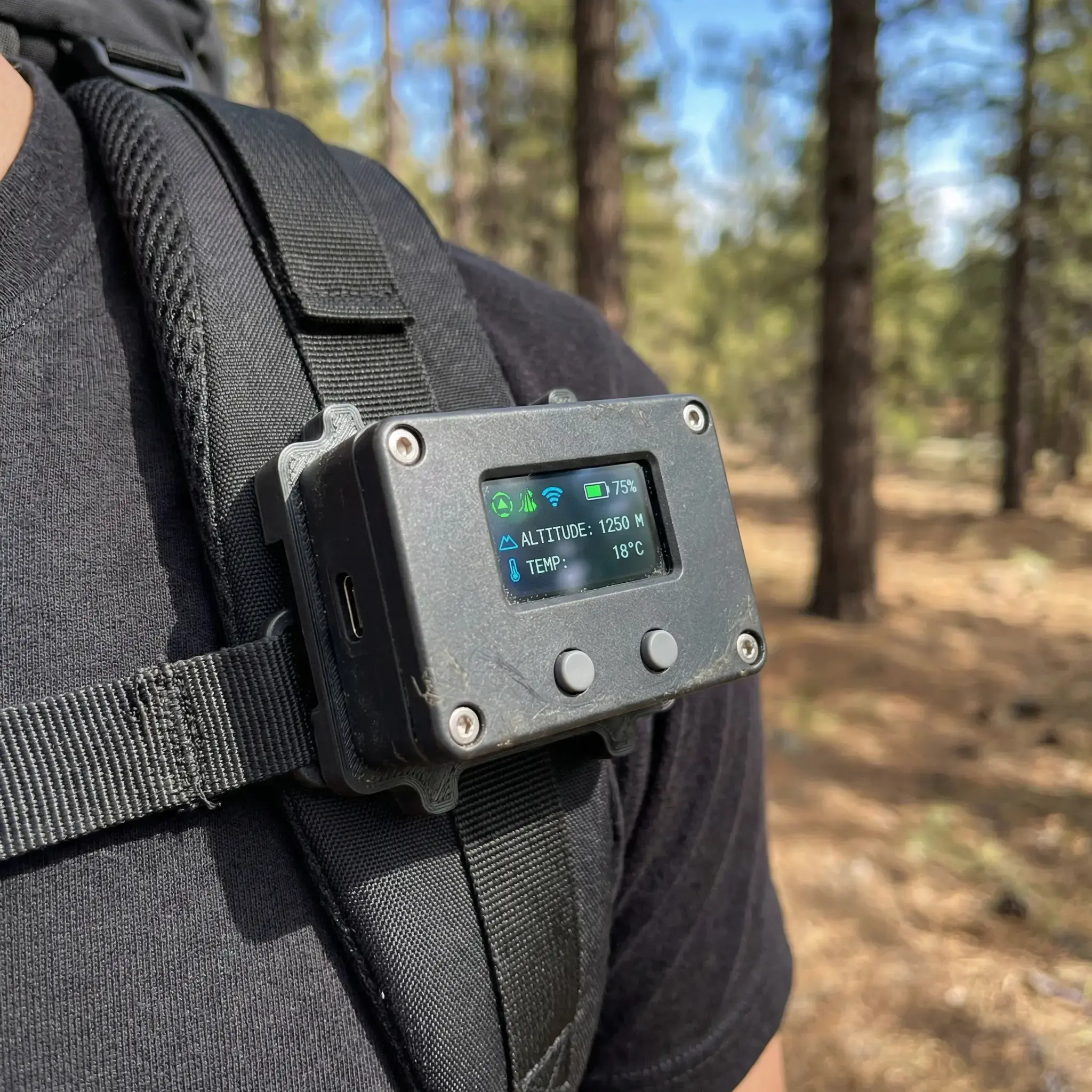
Wearables
The JEITA temperature profile manages the charge rate based on ambient conditions, and low quiescent current extends battery life between charges.
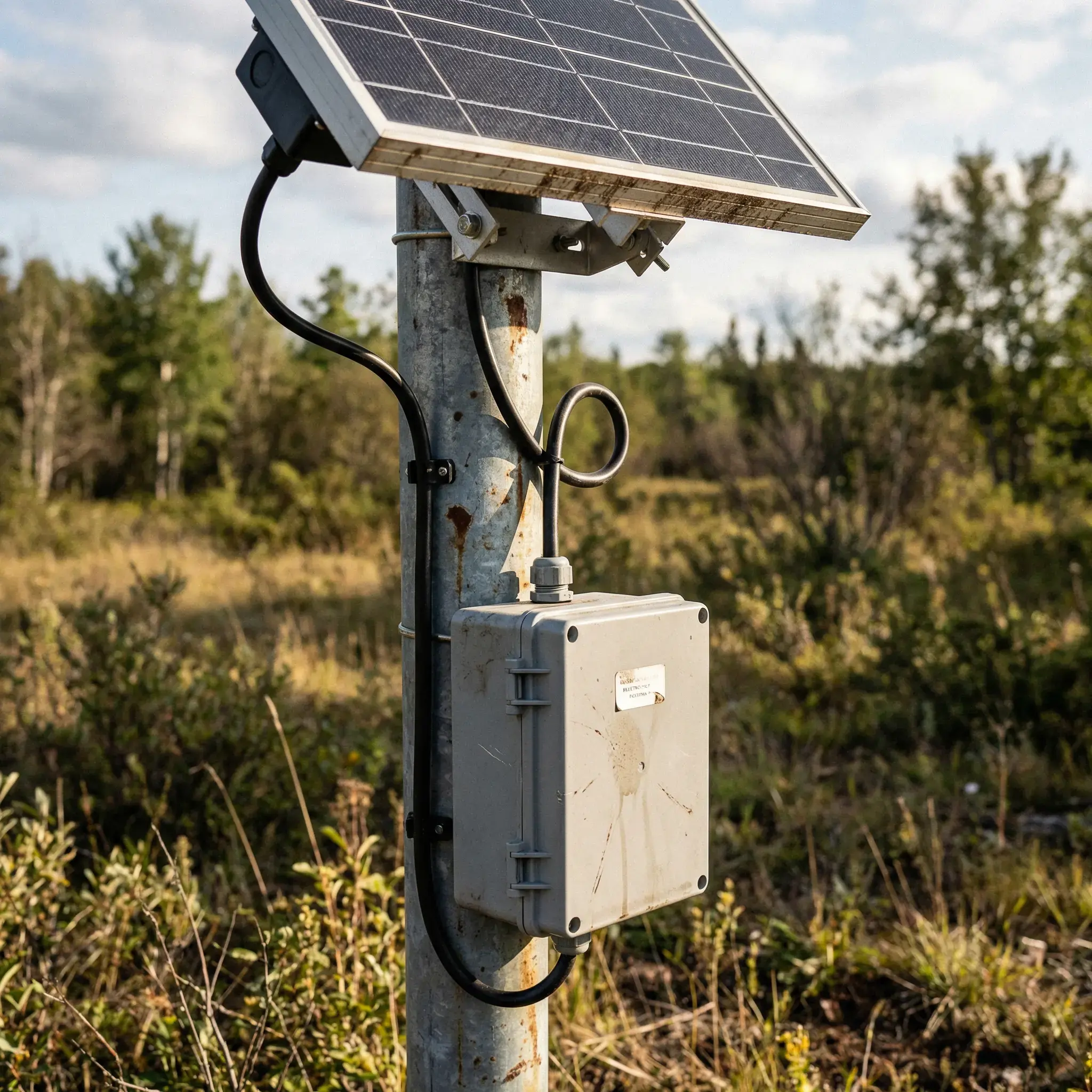
Solar-Powered Deployments
Feed a 6V or 9V-class solar panel straight into the external input pin, with no charge controller or USB connector required.
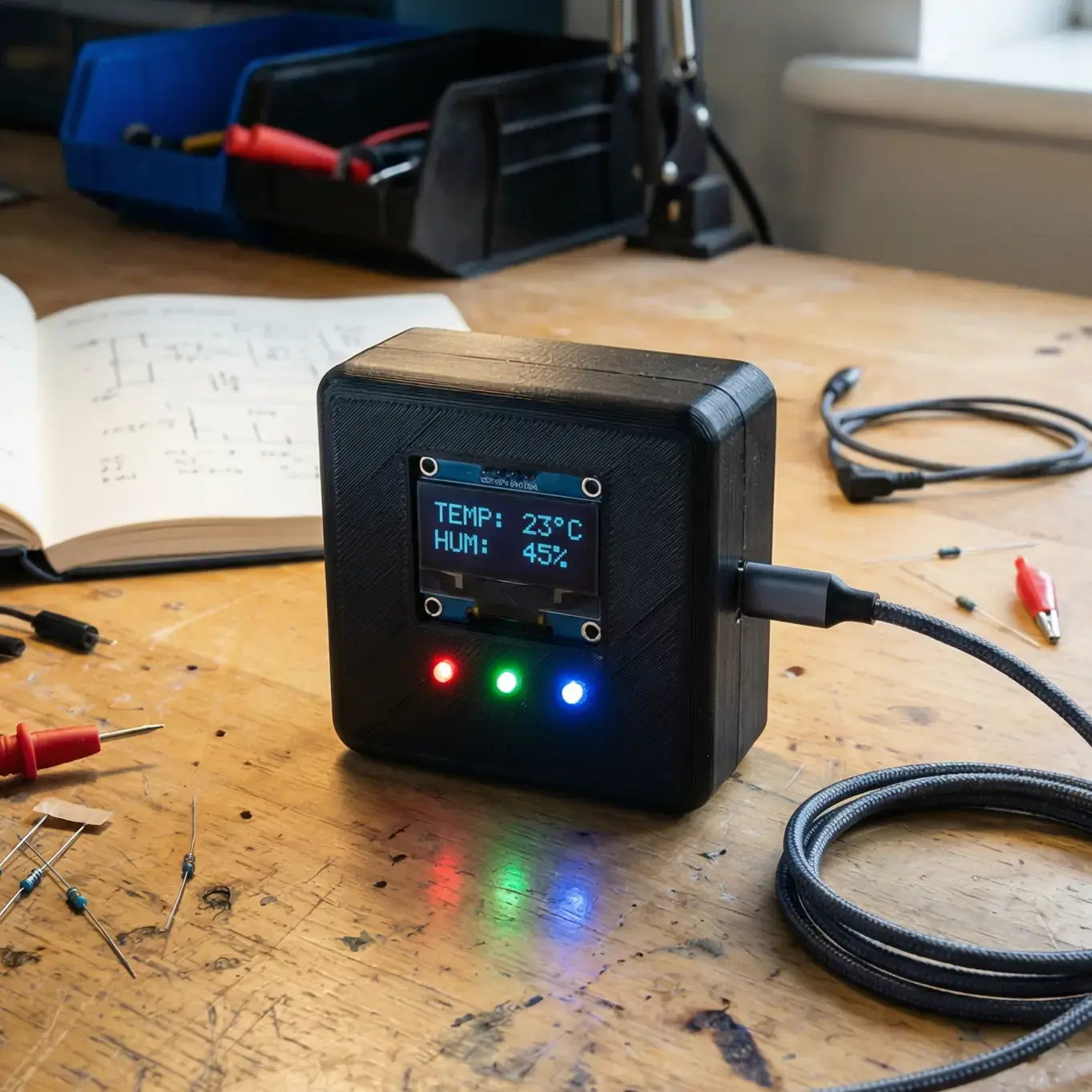
Hardware Products
Prototype on a breadboard and ship with the same module soldered to your PCB. The castellated edges reflow cleanly in production, so there's no power redesign between revisions.
Questions We Get Asked
Which battery cells are supported?
Single-cell (1S) lithium-ion and lithium-polymer packs with a 3.7V nominal, 4.2V maximum chemistry. Solder the 4.1V jumper if you would rather trade a little capacity for longer cycle life. High-voltage cells rated 4.35V and above are not fully supported (email us if interested). We recommend cells above 500 mAh, since 0.5A is the minimum charge current and most cells are rated for 1C charging. You are responsible for selecting a compatible cell.
What ships in the box?
The Battery Pal module, with the JST PH 3-pin connector and the NTC Sense Adapter included. A separate cable adapter kit with the common cables for adapting the sense connection to your battery will be available at launch. The full datasheet and integration documentation will be published for launch.
Is the fuel gauge optional? What is the difference between Battery Pal and Battery Pal Lite?
Using it is optional, fitting it is not: the gauge is always onboard on Battery Pal, and you can simply ignore it if you don’t need it. Use it and you get accurate state of charge, time to empty, battery voltage, and current over I2C (there's a Qwiic connector onboard), plus ship and shutdown modes that cut standby draw even further. Battery Pal Lite is a separate, stripped-down module for cost-sensitive builds: it shares the same footprint, but with simplified charging and protection and a 5V boost output only. Full Lite specifications will be published at launch.
Kickstarter or direct purchase?
Battery Pal launches on Kickstarter in Q3 2026, and the launch list gets the $14.99 first-500 price when the campaign opens. After the campaign ships, Battery Pal joins the regular catalogue at pnlabs.ca and our distributors.
Can it charge while the load is running?
Yes. Power path management runs your load straight from USB-C while the battery charges in parallel, so charge termination stays accurate and your product never browns out on a hot-swap. It also runs from USB-C with no battery connected at all.
Be First in Line.
Battery Pal is in active development.
Prototype boards are in production now.
Not our first module. Protect, Protect+, Protect Nano, FlexTrip, PowerPal, and NanoBuck are shipping today through our store, Amazon (US & Canada), Elecrow, RobotShop, and Lectronz.
Have a question? Contact us. We actually respond.